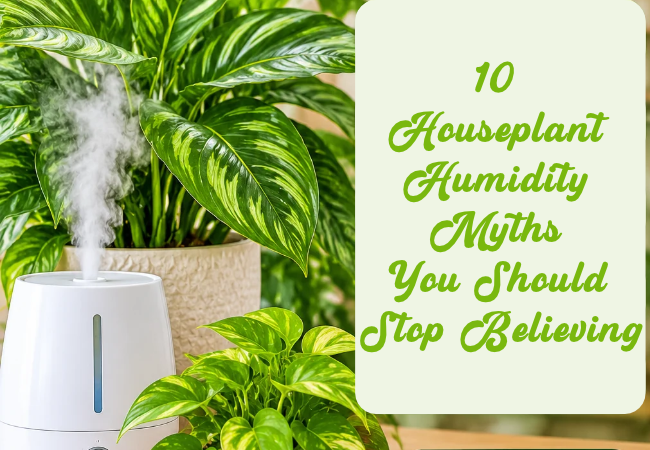
Humidity is an important part of houseplant care. Unfortunately, some popular humidity tricks are less effective than they appear. Different houseplants have different humidity needs, and maintaining the right balance matters more than making your home as humid as possible.
Humidity refers to the amount of water vapor present in the air. It is usually measured as relative humidity (RH), expressed as a percentage. Humidity influences how quickly plants lose water through transpiration.
10 Common Houseplant and Humidity Myths Debunked
Myth 1: All Houseplants Love High Humidity
Not every houseplant needs a humid environment to thrive. Although many tropical plants appreciate additional moisture in the air, others are naturally adapted to dry conditions.
For example, ferns, calatheas, and some alocasias generally prefer higher humidity. In contrast, snake plants, ZZ plants, and many succulents tolerate relatively dry indoor environments.
Providing excessive humidity to plants that prefer drier conditions can encourage fungal problems, particularly when airflow is poor.
Instead of treating all your plants the same, research their individual requirements and group them according to their environmental preferences.
Myth 2: Misting Plants Increases Humidity
Misting involves spraying a fine layer of water onto plant leaves using a spray bottle. It is a popular practice because it seems like an easy way to recreate the humid conditions of tropical environments.
However, misting provides only a very temporary increase in moisture around the foliage. The water evaporates relatively quickly, especially in warm, well-ventilated rooms, meaning it does little to maintain consistently higher humidity.
Frequent misting can also leave foliage wet for extended periods, particularly in poorly ventilated spaces. This may encourage fungal and bacterial leaf diseases.
Rather than relying on daily misting, consider using a humidifier if your plants genuinely need additional atmospheric moisture.
Myth 3: Pebble Trays Dramatically Increase Humidity
Pebble trays are often recommended as an inexpensive alternative to electric humidifiers. They involve filling a shallow tray with water and placing pebbles inside before positioning a plant pot above the waterline.
As the water evaporates, it releases moisture into the surrounding air. While this process does occur, the amount of humidity produced is usually too small to significantly change the conditions around most houseplants.
Pebble trays may provide a slight localized humidity boost, but they are not a reliable solution for plants with high humidity requirements.
If you use one, ensure the bottom of the pot remains above the water to prevent the growing medium from becoming waterlogged.
Myth 4: Yellow Leaves Always Mean Low Humidity
Yellowing leaves are often associated with watering problems, but some plant owners mistakenly assume that low humidity is always responsible.
In reality, yellow leaves can indicate several different problems, including overwatering, underwatering, nutrient deficiencies, inadequate lighting, and pest infestations.
Low humidity may contribute to leaf stress, but it is more commonly associated with symptoms such as crispy brown tips, dry edges, and curling foliage.
Before increasing humidity, inspect the soil, check your watering routine, examine the leaves for pests, and consider whether the plant receives sufficient light. Identifying the actual cause will help you choose the right solution.
Myth 5: Bathrooms Are Perfect for Every Tropical Plant
Bathrooms are frequently recommended as ideal locations for humidity-loving houseplants because showers and baths temporarily release moisture into the air.
Although some bathrooms provide excellent growing conditions, humidity alone does not guarantee that a plant will thrive. Many bathrooms have limited natural light, poor ventilation, and significant temperature fluctuations.
A tropical plant placed in a dark bathroom may struggle even when humidity levels are high. Excess moisture combined with stagnant air can also encourage fungal diseases.
If you want to grow plants in your bathroom, choose a location with suitable lighting and adequate ventilation. Consider using grow lights if natural light is insufficient.
Myth 6: Grouping Plants Together Creates Enough Humidity
Grouping houseplants is another popular humidity recommendation. The idea is that plants release moisture into the air through transpiration, allowing nearby plants to benefit from the additional water vapor.
This can create a slightly more humid microenvironment around a group of plants, particularly when several healthy, leafy plants are positioned close together.
However, the effect is generally modest and may not provide enough humidity for particularly sensitive tropical species.
Grouping plants can still be beneficial, but avoid overcrowding them. Leave enough space for air to circulate freely around the leaves, making it easier to prevent pest infestations and moisture-related diseases.
Myth 7: More Humidity Is Always Better
If some plants enjoy high humidity, it may seem logical that increasing moisture levels will always improve their growth. Unfortunately, this is not true.
Excessively humid conditions, especially when combined with poor air circulation, can encourage fungal and bacterial diseases. Water may remain on leaves for extended periods, creating favorable conditions for certain pathogens.
Very high humidity can also slow transpiration, affecting how plants regulate water movement and nutrient uptake.
Most houseplants benefit from balanced humidity rather than constantly saturated air. Pay attention to both moisture levels and ventilation to create a healthier growing environment.
Myth 8: Humidity and Watering Are the Same Thing
Humidity and watering are closely related, but they are two different aspects of plant care.
Humidity refers to moisture in the air, while watering involves supplying moisture directly to the growing medium around the roots.
A plant growing in a humid room can still suffer from underwatering if its soil becomes too dry. Similarly, a plant in a relatively dry room may receive sufficient water through its roots but experience excessive moisture loss through its leaves.
Both factors influence plant health, but they should be managed independently. Check soil moisture before watering instead of assuming that high humidity means your plants need less water.
Myth 9: A Humidifier Is Only Necessary in Winter
Many people associate indoor dryness with winter because heating systems can reduce relative humidity. However, dry indoor air is not exclusively a cold-weather problem.
Air conditioning can also reduce indoor humidity, while hot, dry weather can increase moisture loss from plant leaves.
If you live in a warm climate or regularly use air conditioning, your indoor plants may experience dry conditions throughout the year.
A humidifier can be useful whenever indoor humidity consistently falls below the preferred range for your plants. The important thing is to monitor actual humidity levels rather than relying on seasonal assumptions.
Myth 10: You Can Judge Humidity by How the Air Feels
You might assume that if your skin feels comfortable and the air does not seem particularly dry, your plants must also be receiving enough moisture.
Unfortunately, human comfort is not an accurate way to measure indoor humidity. You may feel perfectly comfortable in a room where humidity levels are too low for sensitive tropical plants.
The simplest way to monitor humidity is with a digital hygrometer. These inexpensive devices measure relative humidity and help you understand the conditions in different rooms.
Place one near your plants, away from direct sunlight, heating vents, and humidifier outlets, to obtain more useful readings.
Signs Your Houseplants May Be Struggling With Low Humidity
Some plants show visible signs when the surrounding air becomes too dry. Recognizing these symptoms can help you identify potential problems before they become severe.
Brown, crispy leaf edges: Leaf margins and tips become dry and brittle as moisture loss increases.
Curling leaves: Some plants curl their leaves to reduce exposed surface area and limit water loss.
Dry, brittle foliage: Leaves may lose their natural softness and become unusually fragile.
Poor new growth: Developing leaves may struggle to unfurl properly, particularly in humidity-sensitive tropical plants.
Drying flower buds: Some plants may experience premature bud drying or flower drop.
Increased spider mite activity: Spider mites often thrive in warm, dry indoor conditions and can cause stippling, discoloration, and fine webbing.
Which Houseplants Actually Need High Humidity?
These plants generally appreciate moderate to high humidity, although individual species and growing conditions vary.
Calathea: Calatheas are tropical foliage plants known for their beautifully patterned leaves. They generally prefer humidity levels around 50–70% and may develop crispy edges in excessively dry environments.
Fittonia: Also called the nerve plant, fittonia has delicate leaves with colorful veins. It appreciates consistently moist soil and higher humidity, making it suitable for terrariums.
Boston Fern: Boston ferns naturally grow in humid environments. Dry air can cause their delicate fronds to turn brown, become brittle, and shed.
Alocasia: Alocasias generally appreciate warm temperatures and moderate to high humidity. Consistent moisture in the air helps support healthy foliage and leaf development.
Anthurium: These tropical flowering plants appreciate humidity levels around 50–70%. Adequate moisture in the air can help maintain healthy foliage and support flowering.
Maidenhair Fern: Maidenhair ferns are particularly sensitive to dry conditions. They prefer consistently moist growing conditions and higher humidity to prevent their delicate foliage from drying out.
Houseplants That Tolerate Lower Humidity
If maintaining high humidity sounds like too much work, consider these adaptable houseplants. They generally tolerate typical indoor humidity levels without requiring additional moisture.
Snake Plant: Snake plants have thick, upright leaves that store water, helping them tolerate relatively dry indoor environments.
ZZ Plant: Its thick stems and fleshy roots store water, making it an excellent low-maintenance choice for homes with moderate or low humidity.
Pothos: Pothos adapts well to a range of indoor conditions and can tolerate average household humidity, although it appreciates additional moisture.
Spider Plant: Spider plants are adaptable and generally grow well in ordinary indoor environments without special humidity adjustments.
Rubber Plant: Rubber plants tolerate average household humidity and are relatively forgiving when grown in suitable lighting and well-draining soil.
Jade Plant: As a succulent, the jade plant is adapted to drier conditions and generally does not require additional humidity.
How to Maintain Healthy Humidity Levels Indoors
Once you understand your plants’ humidity preferences, maintaining suitable indoor conditions becomes much easier.
- Use a humidifier: This is one of the most effective ways to increase humidity consistently, particularly for tropical plants.
- Monitor humidity levels: Use a digital hygrometer to check conditions and identify rooms that may be too dry.
- Group compatible plants: Place humidity-loving plants together to create a slightly more humid microenvironment.
- Improve air circulation: Use gentle airflow to prevent moisture from becoming trapped around foliage.
- Choose suitable rooms: Bright bathrooms and kitchens may provide naturally higher humidity, provided they have sufficient light and ventilation.
- Avoid heating and cooling vents: Keep sensitive plants away from direct airflow that can rapidly dry their leaves.
- Adjust throughout the year: Monitor humidity regularly because indoor conditions can change with weather, heating, and air conditioning.
Ideal Humidity Levels for Common Houseplants
Different plant groups have different humidity preferences. The following table provides general guidelines for creating suitable indoor growing conditions.
| Plant category | Suggested humidity |
| Tropical foliage plants | 50–70% |
| Ferns | 50–70% |
| Orchids | 40–70% |
| Succulents | 30–50% |
| Cacti | 30–50% |
| Adaptable houseplants | 40–60% |
These ranges are starting points rather than strict requirements. Individual species may tolerate conditions outside these ranges, depending on temperature, watering, airflow, and overall plant health.
My Final Thoughts
Humidity plays an important role in houseplant health, but many popular recommendations are not as effective as they seem.
The best approach is to understand the individual needs of your plants, monitor indoor humidity, and maintain good air circulation.
If you are interested in growing flowers and plants and DIY flower arrangements, consider subscribing to my newsletter. Additionally, follow me on Pinterest to discover more amazing pins.