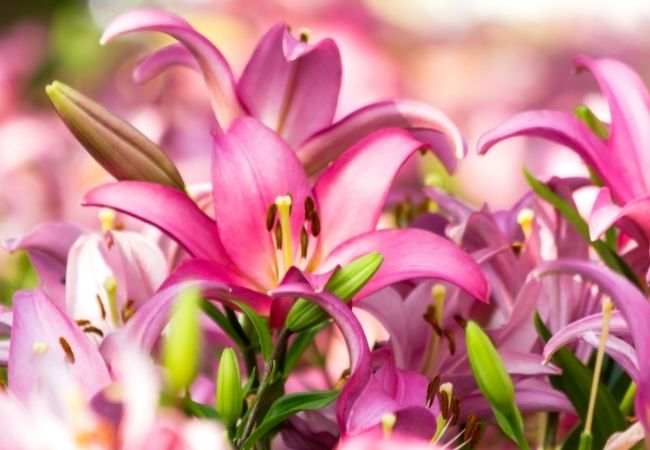
I love lilies because they are among the most elegant and recognizable flowering plants in my garden. They belong to the genus Lilium and grow from true bulbs.
Lilies are admired for their large flowers, striking colors, and, in many varieties, intense fragrance. They are commonly used in garden beds, borders, containers, and cut flower arrangements.
Many plants are called lilies, but not all are true lilies. Daylilies, peace lilies, and calla lilies are not members of the Lilium genus. True lilies grow from scaly bulbs and produce flowers on upright stems.
In this post, you will understand the different varieties of true lilies to help you choose plants that suit their climate, garden design, and maintenance preferences.
Lilies are divided into several major groups based on their origin, flower shape, fragrance, and growth habit. Each group has distinct characteristics that affect how and where they grow best.
Understanding Lily Classification
True lilies are botanically classified under the genus Lilium. Over centuries, breeders have crossed species of lilies to create hybrids with improved color, size, fragrance, and disease resistance. These hybrids are grouped into divisions that help gardeners identify their traits.
Lilies differ in bloom time, height, flower orientation, and scent. Some bloom early in summer, while others flower later. Some lilies face upward, while others nod downward or face outward. Fragrance intensity also varies greatly between types.
Knowing lily classifications allows gardeners to plan for continuous blooms and select varieties that match their garden conditions.
Asiatic Lilies
Asiatic lilies are among the easiest lilies to grow. They are known for their early summer blooms and wide range of vibrant colors. Flowers appear in shades of red, orange, yellow, pink, purple, and white.
These lilies usually have little to no fragrance. This makes them ideal for gardeners who prefer unscented flowers or have fragrance sensitivity. Plants are generally compact and sturdy, making them suitable for borders and containers.
Asiatic lilies bloom earlier than most other types. They thrive in full sun to partial shade and adapt well to many soil types. Popular varieties include ‘Navona,’ ‘Orange Pixie,’ and ‘Lion Heart.’
Oriental Lilies
Oriental lilies are prized for their large, dramatic flowers and powerful fragrance. Their blooms often feature white or pink petals with bold markings, spots, or colored centers.
These lilies bloom later in summer than Asiatic lilies. Their strong scent is most noticeable in the evening and makes them popular for patios and cut flower arrangements. Plants are taller and benefit from some shelter from strong winds.
Oriental lilies prefer slightly acidic soil and consistent moisture. Well-known varieties include ‘Stargazer,’ ‘Casa Blanca,’ and ‘Muscadet.’
Trumpet Lilies
Trumpet lilies produce long, tubular flowers that flare at the ends. Their blooms often face outward or downward and release a rich, sweet fragrance. Colors commonly include white, yellow, peach, and soft pink.
These lilies grow tall and develop strong stems over time. They are long-lived plants that increase in size each year when grown in favorable conditions. Trumpet lilies bloom in mid to late summer.
They prefer full sun and well-drained soil. Popular varieties include ‘Golden Splendor,’ ‘Regale,’ and ‘African Queen.’
Orienpet (OT Hybrid) Lilies
Orienpet lilies are hybrids created by crossing Oriental and Trumpet lilies. They combine the best traits of both parents. Flowers are extremely large and often heavily scented.
These lilies are vigorous growers and can reach impressive heights. Their blooms come in rich colors such as deep pink, yellow, apricot, and bicolor combinations. They are more tolerant of heat and cold than Oriental lilies.
Orienpet lilies bloom in mid to late summer and perform well in garden beds and as focal plants. Popular varieties include ‘Conca d’Or,’ ‘Silk Road,’ and ‘Miss Feya.’
LA Hybrid Lilies
LA hybrid lilies are crosses between Asiatic and Longiflorum lilies. They offer larger flowers than Asiatics and a light, pleasant fragrance. Colors are bold and glossy, often with thick petals that last well.
These lilies are strong growers with excellent disease resistance. They bloom in early to mid-summer and perform reliably in many climates. Their sturdy stems make them excellent cut flowers.
Popular LA hybrid varieties include ‘Royal Sunset,’ ‘Eyeliner,’ and ‘Brindisi.’
Longiflorum Lilies (Easter Lilies)
Longiflorum lilies are best known as Easter lilies. They produce elegant white trumpet-shaped flowers with a gentle fragrance. These lilies are often grown indoors for seasonal displays, but can also be planted outdoors in suitable climates.
They bloom in early summer when grown in gardens. Longiflorum lilies prefer well-drained soil and consistent moisture. Their clean, classic appearance makes them popular in formal garden designs.
Common varieties include ‘Nellie White’ and ‘White Heaven.’
Martagon Lilies
Martagon lilies are also known as Turk’s cap lilies. Their flowers have strongly recurved petals that form a distinctive shape. Blooms usually appear in clusters along tall stems.
These lilies tolerate partial shade better than most other types. They are ideal for woodland gardens and naturalized settings. Martagon lilies establish slowly but can live for decades once settled.
Flower colors range from soft pastels to deep purples and speckled patterns. Popular varieties include ‘Claude Shride’ and ‘Arabian Night.’
Candidum Lilies (Madonna Lily)
Candidum lilies are historic plants that have been cultivated for centuries. They are known for their pure white, fragrant flowers and symbolic associations. Their blooms appear in early summer.
These lilies have unique growing requirements. They prefer shallow planting and develop a basal rosette of leaves in fall. They thrive in well-drained soil and sunny locations.
The Madonna lily remains the most recognized member of this group.
Species (Wild) Lilies
Species lilies are wild forms found in nature rather than bred hybrids. They often have delicate flowers and specific growing needs. Many are native to particular regions and climates.
Examples include Lilium lancifolium, Lilium canadense, and Lilium superbum. These lilies are valuable for conservation and naturalistic gardens.
Species lilies can be more challenging to grow, but reward gardeners with unique beauty and authenticity.
Rare and Unusual Lily Varieties
Some lilies stand out for their unusual traits. Double-flowered lilies have extra petals and a fuller appearance. Dwarf lilies are compact and well-suited for containers and small gardens.
Near-black lilies feature deep burgundy or almost black petals. Some varieties display dramatic color changes as flowers mature. These unusual lilies add interest and contrast to garden designs.
Choosing the Right Lily Variety
Choosing the right lily depends on climate, garden space, and personal preference. Cold-hardy varieties perform better in cooler regions. Heat-tolerant hybrids suit warmer climates.
Sun exposure is important. Most lilies prefer full sun with shaded roots. Soil drainage and fertility also influence success. Fragrance strength should be considered when planting near living spaces.
Gardeners should also think about plant height and bloom time when selecting varieties.
Planting and Care Basics for All Lily Varieties
Lilies grow best in loose, well-drained soil. Bulbs should be planted at a depth that protects them from temperature extremes. Consistent watering supports healthy growth, but waterlogged soil should be avoided.
Fertilization during active growth encourages strong stems and abundant blooms. Mulching helps keep roots cool and conserves moisture.
Tall lilies may require staking in windy areas. Regular inspection helps prevent pest and disease problems.
Landscaping and Design Ideas Using Lilies
Lilies work well in mixed perennial borders. They add vertical interest and bold color. In formal gardens, they create symmetry and elegance. In cottage gardens, they blend beautifully with softer flowering plants.
Woodland gardens benefit from shade-tolerant lilies like Martagons. Containers allow gardeners to enjoy lilies on patios and balconies. Companion plants help shade roots and enhance visual appeal.
Frequently Asked Questions About Lily Varieties
Which lilies bloom the longest?
LA hybrid and Orienpet lilies tend to have the longest-lasting blooms, especially when different lily types are planted together to extend the flowering season.
Which lilies are best for beginners?
Asiatic lilies are the best choice for beginners because they are hardy, easy to grow, and adapt well to a wide range of conditions.
Which lilies are most fragrant?
Oriental and Trumpet lilies are the most fragrant, producing strong, sweet scents that intensify in warm weather and evenings.
Which lilies tolerate heat or cold best?
Asiatic and LA hybrid lilies tolerate cold climates well, while Orienpet lilies handle heat better than most other fragrant varieties.
My Final Thoughts
I love lilies because they offer extraordinary diversity in form, color, and fragrance. Understanding the different lily varieties has allowed me as a gardener to make informed choices and enjoy long-lasting beauty.
If you are interested in growing flowers and plants and DIY flower arrangements, consider subscribing to my newsletter. Additionally, follow me on Pinterest to discover more amazing pins.