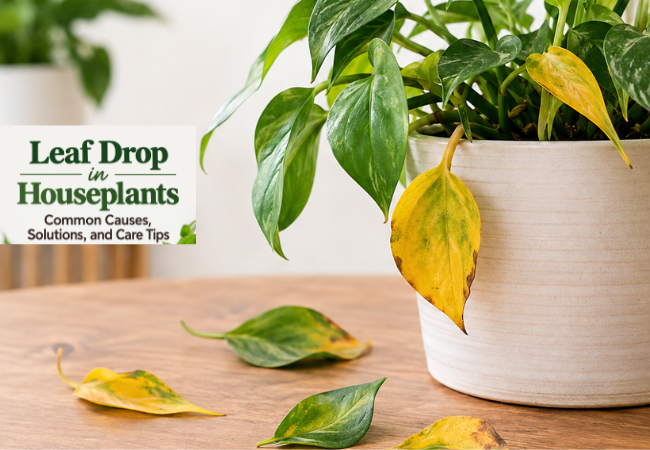
Seeing leaves suddenly falling from your favorite houseplant can be worrying. One day my plant looks full and healthy, and the next, leaves are scattered around the pot.
I have learned that leaf drop does not always mean my plant is dying. Plants naturally lose older leaves, but sudden or excessive leaf loss is often a sign that something in the growing environment needs attention.
Is Leaf Drop Normal for Houseplants?
Before changing your plant’s entire care routine, consider whether the leaf drop is actually normal.
Normal leaf loss is generally not a concern when, only a few older leaves are affected, the rest of the plant looks healthy, new leaves are developing normally, the stems remain firm, and there are no signs of pests or disease.
Problematic leaf drop tends to be more sudden and widespread. If several healthy-looking leaves fall within a short period, particularly when accompanied by yellowing, wilting, brown spots, curling, or soft stems, your plant is probably experiencing stress.
Overwatering: One of the Most Common Causes
Overwatering is one of the most frequent reasons houseplants develop yellow leaves and eventually lose them.
Many people assume that giving a plant plenty of water will keep it healthy. However, roots need both moisture and oxygen. When the soil remains saturated for too long, there is less air around the roots, which can interfere with their ability to function properly. Persistently wet conditions can also contribute to root rot.
Signs of overwatering
Look for yellowing leaves, soft or mushy leaves, wilting even though the soil is wet, brown or black areas on leaves, soft stems, a musty or unpleasant smell from the soil, and leaves dropping before they appear completely dry.
How to fix an overwatered plant
Start by checking the soil rather than automatically watering again.
If the soil is consistently wet, allow the upper portion to dry before watering again. Make sure excess water can escape through the drainage holes.
If the soil stays wet for a very long time, the pot may be too large, the soil may drain poorly, or the plant may be receiving too little light.
For plants showing serious root problems, carefully remove the plant from its pot and inspect the roots.
Healthy roots are generally firm, while severely damaged roots may be dark, mushy, and unpleasant-smelling. Remove badly damaged portions with clean tools and repot the plant in fresh, well-draining soil.
Underwatering and Dry Soil
Too little water can cause leaf drop just as easily as too much water. When a plant does not receive enough moisture, it cannot transport water efficiently to its leaves. The leaves may wilt, curl, become dry, and eventually fall.
Signs of underwatering
Common symptoms include drooping leaves, dry, crispy leaves, brown leaf edges, curling leaves, very dry potting soil, leaves falling after becoming brittle, and a lightweight pot.
How to rehydrate a dry plant
If the soil is extremely dry, water the plant thoroughly until some water drains from the bottom of the pot. This helps moisten the entire root ball.
For severely dried-out soil that repels water, you may need to water slowly and allow the moisture to soak in before adding more.
Afterward, avoid following a rigid calendar. Instead, check the soil regularly and water according to the plant’s needs, pot size, light levels, temperature, and season.
Too Much or Too Little Light
Light has a major influence on plant health, and both insufficient and excessive light can contribute to leaf problems.
Plants that receive too little light may struggle to produce enough energy for healthy growth. Over time, they can become weak and lose leaves.
On the other hand, a plant suddenly exposed to intense direct sunlight may develop scorched leaves.
Signs of insufficient light
You may notice slow growth, long, stretched stems, smaller new leaves, pale or yellowing foliage, and leaves dropping from the lower portions of the plant.
Signs of excessive light
Look for bleached-looking leaves, brown or crispy patches, scorch marks, curling leaves, and sudden wilting.
How to correct light problems
Move the plant gradually rather than making a dramatic change overnight. Many popular houseplants prefer bright, indirect light. A location near a bright window may work well, but the ideal position depends on the specific plant.
If a plant has been growing in a relatively dim location, gradually introduce it to stronger light to reduce the risk of leaf scorch.
Sudden Temperature Changes and Cold Drafts
Houseplants can react badly to sudden temperature changes. Temperature stress can cause leaves to wilt, discolor, curl, or fall.
A plant sitting beside a cold window, air conditioner, heater, or frequently opened door may experience repeated temperature fluctuations. Tropical plants can be particularly sensitive to cold conditions.
Common sources of temperature stress
Check whether your plant is near:
- Air-conditioning vents
- Space heaters
- Radiators
- Drafty windows
- Frequently opened exterior doors
- Very cold glass at night
- Hot appliances
Low Humidity and Dry Indoor Air
Some houseplants naturally come from humid environments and may struggle when indoor air becomes very dry. Low humidity can cause moisture to leave leaves faster than the plant can replace it.
Signs of low humidity
Typical symptoms include brown leaf tips, crispy edges, curling leaves, dry-looking foliage, and premature leaf drop. Plants with thin or delicate foliage can be particularly sensitive.
Ways to increase humidity
You can increase humidity by:
- Grouping plants together.
- Using a humidifier.
- Placing plants in naturally humid rooms when their light requirements are suitable.
- Keeping plants away from heating and cooling vents.
- Monitoring humidity rather than relying only on guesswork.
Avoid keeping the soil constantly wet simply because the air is dry. Humidity and watering are related but are not interchangeable.
Poor Soil and Root Problems
The condition of the roots is closely connected to the condition of the leaves. Compacted soil can restrict airflow and drainage, while poorly draining soil can keep roots excessively wet. Both situations can lead to unhealthy roots and leaf loss.
Signs of root problems
Possible warning signs include leaves falling despite regular watering, persistent yellowing, wilting while the soil is wet, slow growth, soft stems, and roots that appear dark and mushy.
If you suspect root problems, gently remove the plant from its pot and inspect the root system.
Plants with extensive root damage may need to be repotted into fresh, well-draining potting mix. Choose a container with drainage holes and avoid placing a small plant into an unnecessarily large pot, since excess soil can retain moisture for too long.
Pests Causing Leaf Drop
Sometimes the problem is not watering or lighting at all. Tiny pests can weaken a plant by feeding on its leaves, stems, or sap.
Common houseplant pests include spider mites, aphids, mealybugs, scale insects, and fungus gnats.
What to look for
Inspect both the tops and undersides of leaves. Look for tiny insects, fine webbing, sticky residue, white cotton-like clusters, small bumps attached to stems, speckled or discolored leaves, and distorted new growth.
If you find pests, separate the affected plant from other houseplants when possible. Early treatment can prevent the infestation from spreading.
Treatment depends on the pest, but may include physically removing insects, washing foliage, pruning heavily affected portions, or using an appropriate houseplant pest treatment according to its label.
Transplant Shock and Recent Changes
Did the leaf drop begin shortly after you repotted or moved your plant? If so, the plant may simply be responding to environmental stress.
Repotting can disturb roots, while moving a plant can suddenly change its light, humidity, temperature, and airflow.
Other stressful changes include:
- Moving into a new home
- Changing rooms
- Replacing a pot
- Disturbing the root ball
- Suddenly changing light levels
- Moving a plant from outdoors to indoors
How to help a stressed plant
Give the plant time to adjust. Keep its conditions relatively stable and avoid making several additional changes at once. Provide appropriate light, check the soil before watering, and avoid excessive fertilizer while the plant is recovering.
A small amount of leaf loss after a major environmental change does not necessarily mean the plant is doomed.
Nutrient Deficiencies
Plants need nutrients to produce healthy foliage and new growth. When nutrients are unavailable in sufficient amounts, leaves may become pale, yellow, or otherwise unhealthy.
However, nutrient deficiencies should not be your first assumption whenever leaves fall. Watering problems, inadequate light, pests, and root damage are often more likely explanations.
Signs that nutrition may be involved
Depending on the nutrient and plant, you might see pale leaves, yellowing between leaf veins, poor new growth, small leaves, and overall weak growth.
If your plant has been in the same potting mix for a long time and is actively growing, it may eventually benefit from appropriate fertilization.
Follow the fertilizer’s instructions carefully. More fertilizer is not better. Overfertilization can damage roots and create additional problems.
Natural Leaf Drop and Plant Aging
Not every fallen leaf needs to be treated. As houseplants grow, older leaves eventually become less useful. The plant can redirect resources toward newer growth, allowing older foliage to yellow and fall.
How to Diagnose the Cause of Leaf Drop
Instead of immediately changing everything about your plant’s care routine, work through a simple troubleshooting process.
Check the soil: Is it soaking wet, slightly moist, or completely dry?
Examine the leaves: Are they yellow, brown, crispy, soft, spotted, curled, or covered in pests?
Check the roots: If the plant is showing severe symptoms, inspect the roots for signs of rot or damage.
Look at the lighting: Has the plant been receiving significantly more or less light recently?
Consider temperature: Is it sitting next to a cold window, heater, air conditioner, or draft?
Look for pests: Inspect the undersides of leaves and along stems.
Think about recent changes: Has the plant recently been repotted, moved, fertilized, or brought indoors? The pattern of symptoms can often tell you more than leaf drop alone.
For example, yellow and soft leaves combined with wet soil point toward a different problem than brown, crispy leaves combined with extremely dry soil.
How to Save a Houseplant Losing Leaves
Once you have identified the likely cause, focus on correcting that specific problem.
Start with these steps:
Inspect the entire plant: Look at the soil, leaves, stems, pot, and drainage holes.
Correct watering: Water only when the plant’s soil and species requirements indicate that it needs moisture.
Improve lighting: Move the plant to a location that provides the appropriate amount of light.
Check the roots: If the plant remains unhealthy despite proper care, investigate possible root problems.
Look for pests: Treat infestations early and isolate affected plants when necessary.
Remove severely damaged foliage: Removing dead or badly damaged leaves can improve the plant’s appearance and allow you to monitor new growth more easily.
Avoid overcorrecting: Don’t simultaneously add fertilizer, repot, move the plant into direct sun, and dramatically increase watering. Too many changes can create even more stress.
Be patient: Healthy new growth is one of the best signs that a recovering plant is improving. Damaged leaves may not return to their original appearance, so focus on how the plant develops from this point forward.
My Final Thoughts
Leaf drop is usually a symptom rather than the actual problem. The most important thing is not to panic and start changing everything at once. Instead, examine the plant carefully and look for patterns.
If you are interested in growing flowers and plants and DIY flower arrangements, consider subscribing to my newsletter. Additionally, follow me on Pinterest to discover more amazing pins.